
This post contains affiliate links. As an Amazon Associate, we earn from qualifying purchases. This means we may earn a small commission if you purchase through our links, at no extra cost to you.
If you’ve been searching for a show-stopping dessert that combines creamy cheesecake with the sweet taste of summer fruit, this Keto Peach Cheesecake is exactly what you need. It brings together a buttery almond flour crust, a rich cream cheese filling, and juicy peaches in a way that feels indulgent without the carb overload. Perfect for summer gatherings, birthday celebrations, or any time you want to impress your guests with something special.
I remember the first time I made this cheesecake for a family barbecue. Everyone was skeptical that a low-carb dessert could taste this good. However, after the first bite, the room went quiet except for the sound of forks scraping plates. The combination of tangy cream cheese and sweet peaches creates a flavor profile that’s both nostalgic and refreshing.
This recipe works beautifully whether you’re new to keto baking or a seasoned pro. The techniques are straightforward, and the results are consistently impressive. Plus, you can make it a day ahead, which means less stress when you’re hosting.
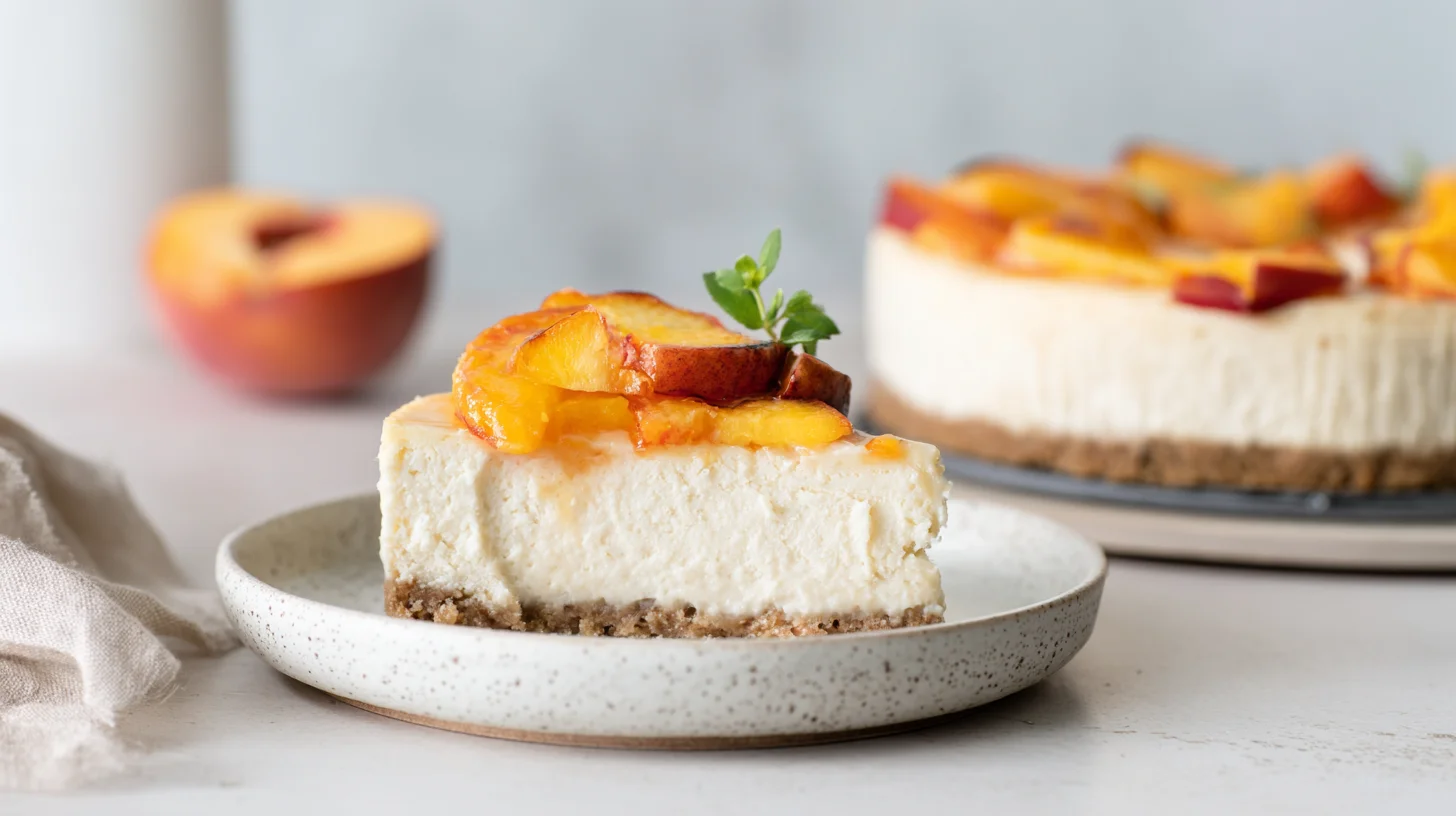
Why You’ll Love This Recipe
- Only 4g net carbs per slice
- Perfect for summer entertaining
- No-bake option available
- Can be made 24 hours ahead
- Gorgeous presentation that wows guests
Let’s Make This Creamy Peach Cheesecake
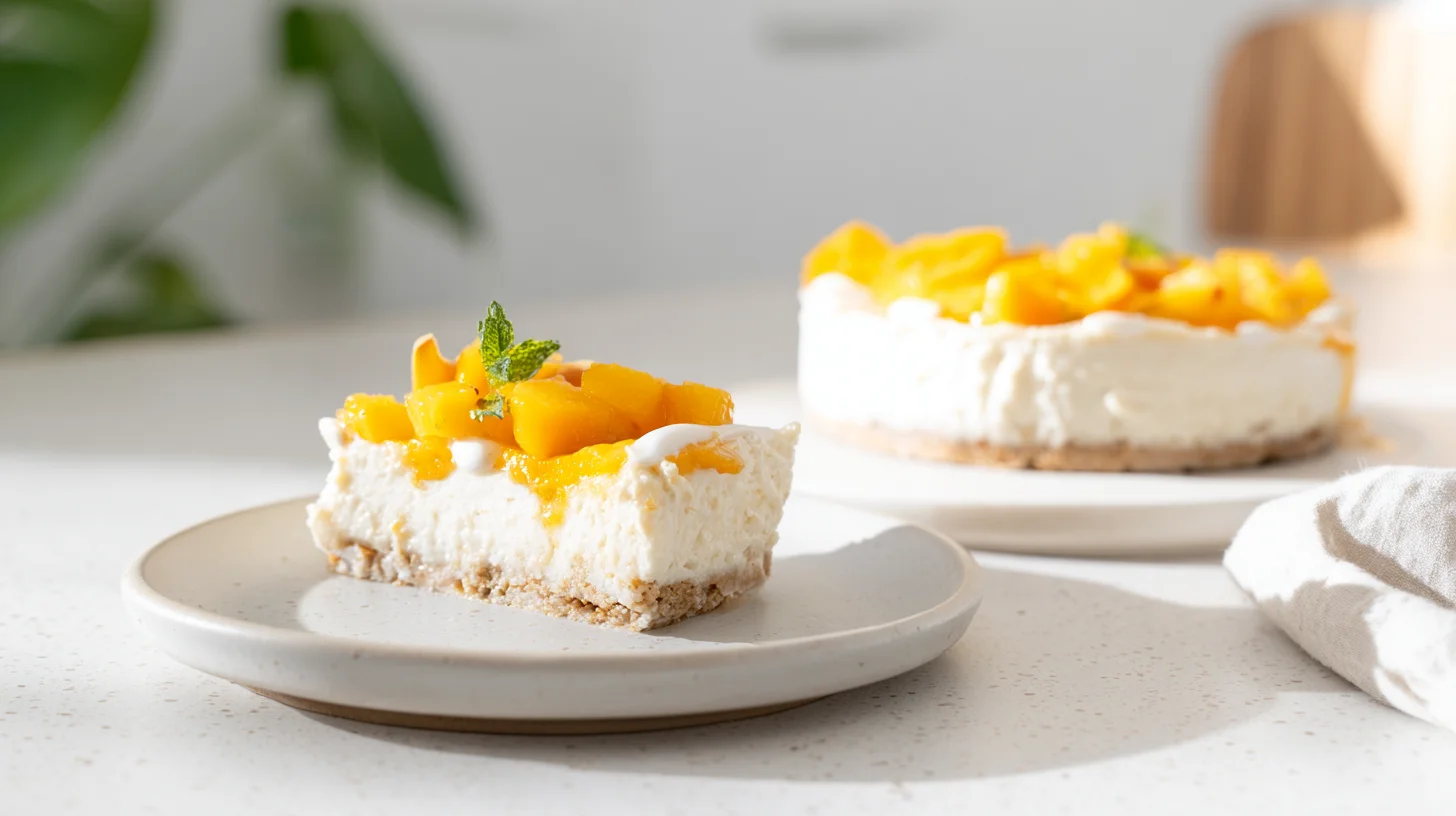
Keto Peach Cheesecake
12
servings25
minutes55
minutes320
kcalThis stunning Keto Peach Cheesecake combines a buttery almond flour crust with a rich, creamy filling topped with fresh peaches. At only 4g net carbs per slice, it’s the perfect guilt-free dessert for any occasion.
Ingredients
2 cups almond flour
0.25 cup butter
3 tablespoons powdered erythritol
24 oz cream cheese
0.75 cup powdered erythritol
3 large eggs
0.5 cup sour cream
1 teaspoon vanilla extract
2 medium fresh peaches
2 tablespoons lemon juice
1 tablespoon powdered erythritol
0.25 teaspoon cinnamon
Directions
- Preheat your oven to 325°F and line a 9-inch springform pan with parchment paper. Grease the sides lightly with butter.
- Mix together the almond flour, melted butter, and 3 tablespoons of powdered erythritol in a bowl until it resembles wet sand.
- Press the crust mixture firmly into the bottom of the prepared pan, creating an even layer. Bake for 10 minutes, then remove and let cool.
- Beat the cream cheese in a large bowl with an electric mixer until smooth and fluffy, about 2-3 minutes.
- Add the erythritol to the cream cheese and beat until well combined and no lumps remain.
- Mix in the eggs one at a time, beating on low speed just until incorporated after each addition. Don’t overmix.
Notes
- Make sure all dairy ingredients are at room temperature for the smoothest filling.
- Store leftover cheesecake covered in the refrigerator for up to 5 days.
- For a no-bake version, add 1 tablespoon of gelatin to the filling and skip the baking step.
- Fresh peaches can be replaced with frozen (thawed and drained) or other low-carb berries.
Nutrition Facts
- Serving Size: 1 g
- Total number of serves: 12
- Calories: 320kcal
- Fat: 29g
- Carbohydrates: 8g
- Fiber: 4g
- Protein: 7g
Like this recipe?
Follow @easyketodessert on Pinterest
Expert Tips for the Best Keto Peach Cheesecake
Making a perfect cheesecake requires attention to a few key details. Therefore, I’m sharing my tried-and-true tips that will help you avoid common pitfalls. These techniques ensure your cheesecake turns out creamy, smooth, and absolutely delicious every single time.
Getting Your Ingredients to Room Temperature
This step is crucial for a smooth, lump-free filling. Take your cream cheese and eggs out of the fridge at least one hour before you start. Cold cream cheese creates lumps that are nearly impossible to smooth out. In addition, room temperature ingredients blend more evenly, creating that silky texture we all love in cheesecake.
Choosing and Preparing Your Peaches
Fresh peaches work beautifully when they’re in season. Look for fruit that’s fragrant and gives slightly when pressed. However, frozen peaches are perfectly acceptable and sometimes more convenient. Just make sure to thaw them completely and drain excess liquid before using. Pat them dry with paper towels to prevent a watery topping.
Preventing Cracks in Your Cheesecake
Nobody wants a cracked cheesecake top. First, avoid overmixing your batter once you add the eggs. Mix just until combined. Second, bake at a lower temperature and use a water bath if possible. Finally, let your cheesecake cool gradually in the oven with the door cracked open. These steps minimize temperature shock that causes cracks.
Using the Right Sweetener
Not all keto sweeteners behave the same way in cheesecake. I recommend using powdered erythritol for the smoothest texture. Granulated sweeteners can leave a gritty feeling. For more information on sweetener options, you can explore different varieties. Monk fruit blends also work wonderfully in this recipe.
Achieving Clean Slices
For picture-perfect slices, use a sharp knife dipped in hot water. Wipe the blade clean between each cut. This technique prevents the filling from sticking and dragging. As a result, you’ll get those professional-looking slices that make everyone reach for their cameras.
Delicious Ways to Customize Your Cheesecake
One of the best things about this recipe is how versatile it is. You can easily adapt it to suit different tastes or dietary needs. Furthermore, these variations let you enjoy this dessert year-round, even when peaches aren’t in season.
Try Different Fruit Toppings
While peaches are amazing, you can swap them for other low-carb fruits. Strawberries, blueberries, or raspberries all work beautifully. For inspiration, check out this strawberry version that uses similar techniques. Mixed berries create a gorgeous presentation and add variety to your dessert table.
Make It No-Bake
During hot summer months, you might prefer a no-bake version. Simply use a no-bake crust and add gelatin to the filling for structure. This no-bake cheesecake guide walks you through the process step by step. The result is just as creamy and delicious without heating up your kitchen.
Create Individual Servings
Transform this recipe into mini cheesecakes using a muffin tin. Individual portions are perfect for parties and make serving easier. Reduce the baking time to about 18-20 minutes. These cute little cheesecakes are always a hit at gatherings.
Add a Peach Swirl
For an elegant marble effect, puree some peaches and swirl them into the batter before baking. Use a knife to create gentle swirls. This technique adds visual interest and distributes the peach flavor throughout. It’s a simple way to elevate the presentation.
Make It Dairy-Free
You can substitute dairy-free cream cheese and coconut cream for the dairy ingredients. Make sure your dairy-free cream cheese is full-fat for the best texture. The flavor will be slightly different but still absolutely delicious. This option opens up the recipe to those with dairy sensitivities.
Try a Lighter Version
For a fluffier texture, you might enjoy this cheesecake fluff recipe that’s lighter and airier. It uses similar flavors but with a mousse-like consistency. Both versions are wonderful, just different textures for different occasions.
Understanding the Nutrition in Every Slice
Let’s break down what you’re getting in each serving of this delicious dessert. Each slice contains approximately 320 calories, which is reasonable for a rich, satisfying dessert. The fat content sits at around 29 grams per serving, mostly from the cream cheese and heavy cream. This high fat content is exactly what makes keto desserts so satisfying and helps keep you full.
Protein comes in at about 7 grams per slice. This might seem modest, but it’s a nice bonus from the cream cheese and eggs. The total carbohydrate count is 8 grams, but here’s where it gets interesting. With 4 grams of fiber, your net carbs drop to just 4 grams per serving. That’s incredibly low for such a decadent dessert.
The sugar content is minimal at only 2 grams, and that comes naturally from the peaches. Using a quality springform pan ensures even portions, making it easier to track your macros accurately. These numbers make this cheesecake a perfect fit for your keto lifestyle without derailing your progress.
Remember that these values can vary slightly depending on the specific brands you use. However, they provide a reliable guideline for meal planning. The combination of high fat, moderate protein, and low net carbs keeps you in ketosis while satisfying your sweet tooth completely.
Your Cheesecake Questions Answered
Over the years, I’ve received countless questions about making the perfect keto cheesecake. Below you’ll find answers to the most common concerns. These tips will help you troubleshoot any issues and ensure success every time you make this recipe.
Can I use canned peaches instead of fresh?
Yes, you can use canned peaches, but make sure they’re packed in water or juice, not syrup. Drain them thoroughly and pat dry with paper towels to remove excess moisture. Fresh or frozen peaches typically have better texture and flavor, but canned works in a pinch.
How long does this cheesecake need to chill?
The cheesecake needs at least 4 hours to chill properly, but overnight is ideal. This allows the filling to set completely and the flavors to meld together. If you’re short on time, 4 hours in the fridge will work, but the texture improves with longer chilling.
Can I freeze Keto Peach Cheesecake?
Absolutely! This cheesecake freezes beautifully for up to 3 months. Wrap individual slices tightly in plastic wrap, then aluminum foil. Thaw in the refrigerator overnight before serving. The texture remains creamy and delicious after freezing.
Why did my cheesecake crack on top?
Cracks usually happen from overmixing, overbaking, or cooling too quickly. Mix just until ingredients are combined, bake at the correct temperature, and let it cool gradually in the oven with the door cracked. A water bath also helps prevent cracks by maintaining even temperature.
What can I substitute for almond flour in the crust?
You can use crushed pecans, walnuts, or a combination of nuts for the crust. Coconut flour won’t work well as a direct substitute because it absorbs moisture differently. Sunflower seed flour is a good nut-free alternative if you have allergies.
How do I know when the cheesecake is done baking?
The cheesecake is done when the edges are set but the center still jiggles slightly when you gently shake the pan. It will continue to set as it cools. The internal temperature should reach 150°F in the center. Overbaking leads to a dry, cracked cheesecake.







Leave a Reply